Desktop user guide
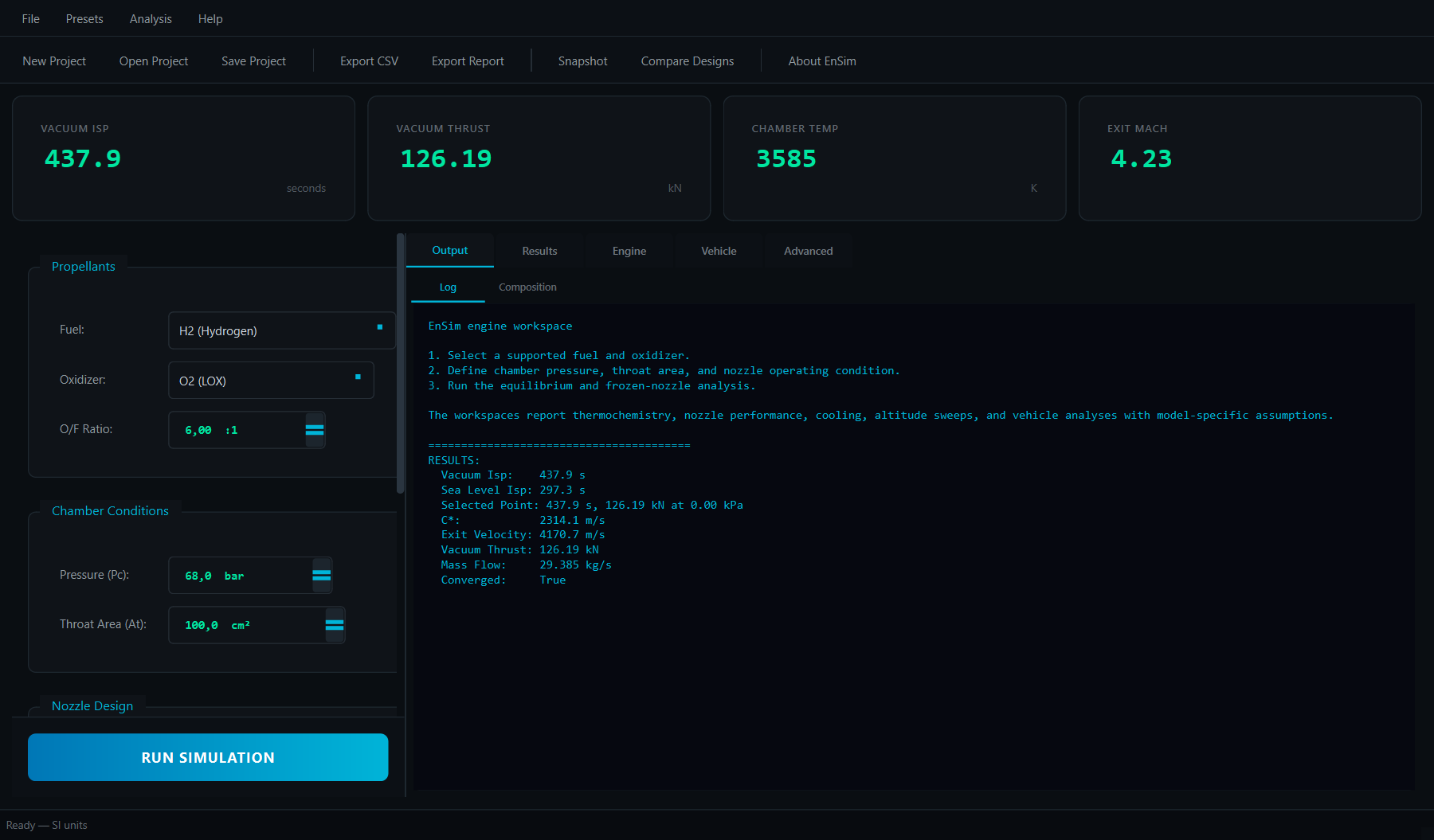
Engine workflow
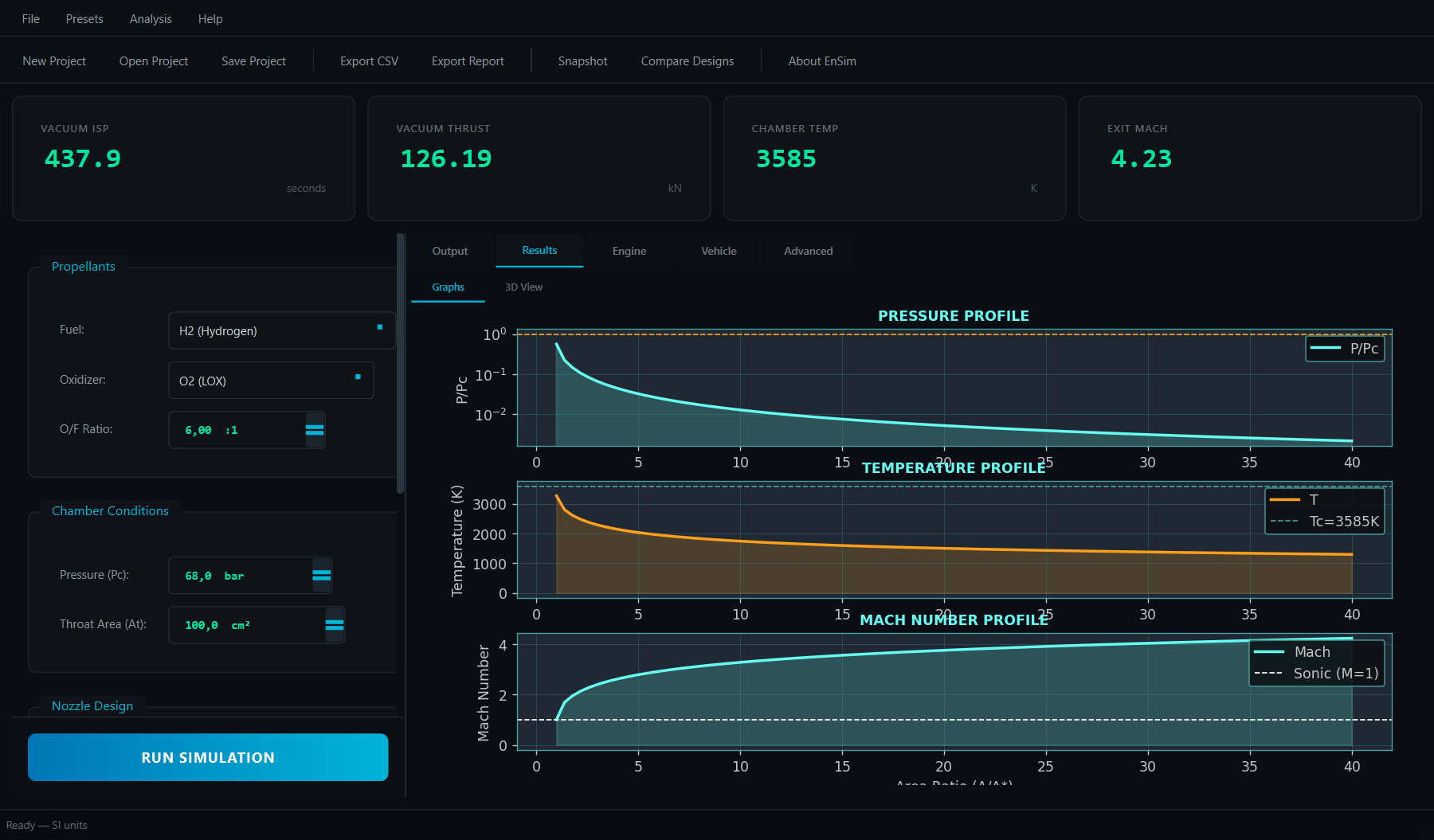
The contextual input panel collects propellants, mass O/F ratio, chamber and ambient pressure, expansion ratio, throat diameter and explicit efficiency inputs. Run calculates equilibrium first and then the selected frozen ideal nozzle operating point. Output presents convergence and key values; Results contains station plots and the optional 3-D view.
Engine specialist tabs
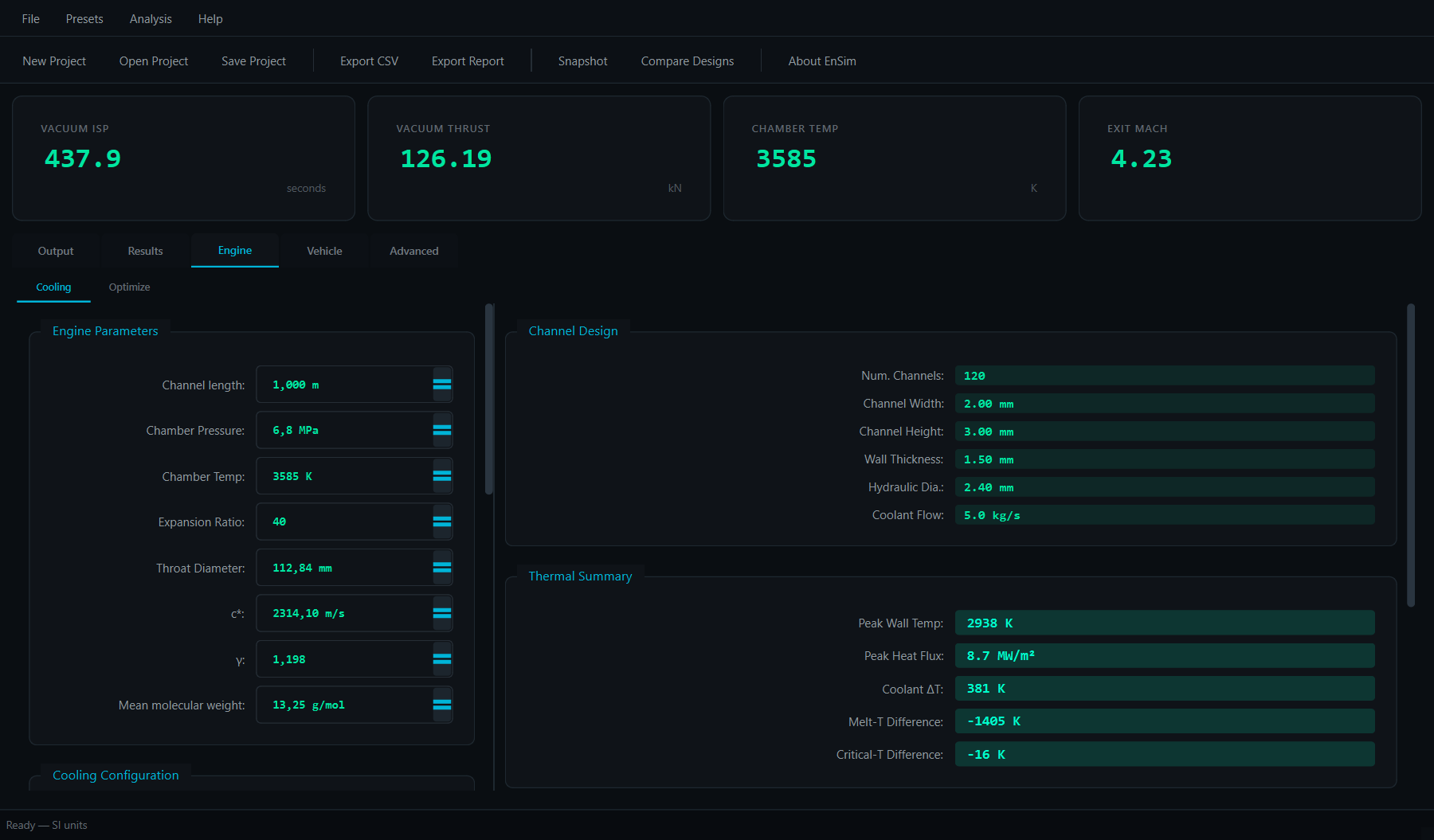
- Thermal/cooling uses the current chamber result together with explicitly entered channel geometry, coolant, wall material and correlation inputs.
- Optimization exposes reduced-order nozzle, staging, trajectory and load objectives. Constraints shown in the form are the constraints enforced.
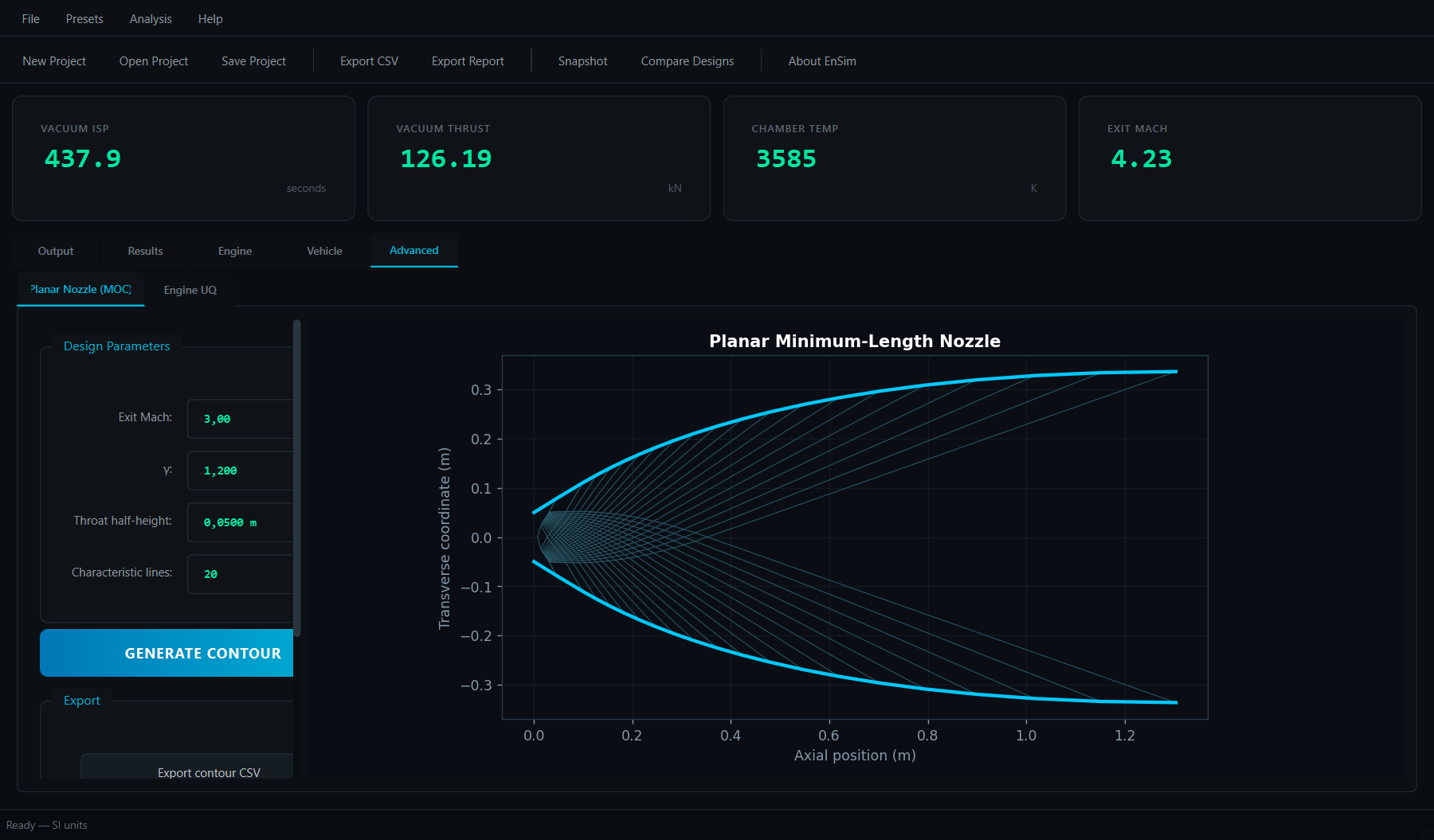
- Advanced / MOC designs a symmetric planar minimum-length contour under steady, inviscid, irrotational and calorically perfect assumptions. Its transverse input is throat half-height, not an axisymmetric radius.
- Advanced / Engine UQ propagates the displayed uncertainty model and reports valid and failed runs.
Vehicle and flight
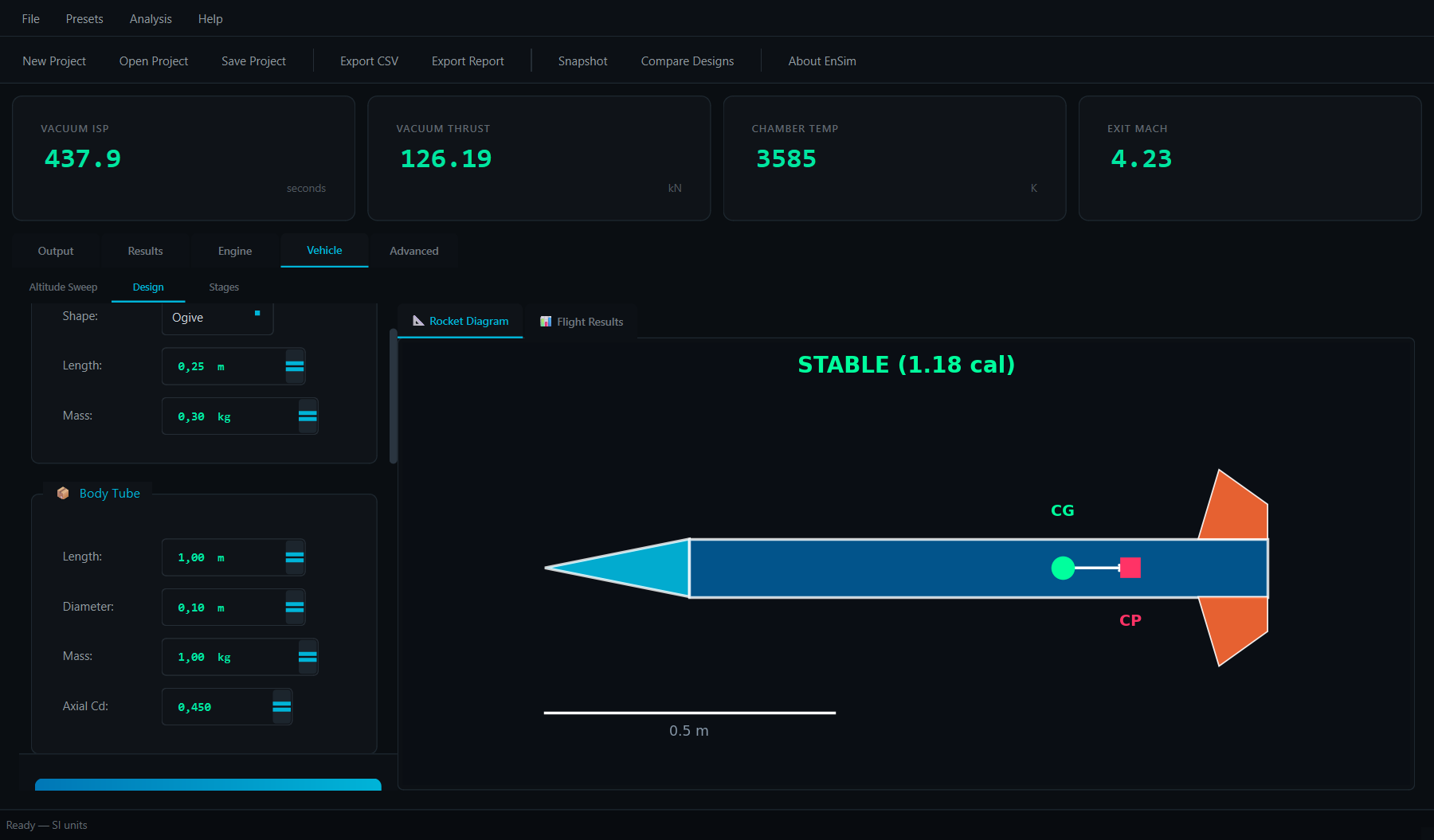
Configure the vehicle before running flight or dispersion analysis. Flight uses the engine mass flow and available propellant to determine cutoff. The optional WGS-84 path returns ECI, local ENU and geodetic histories. The general aerodynamic model is preliminary; consult flight verification.
Three-dimensional view
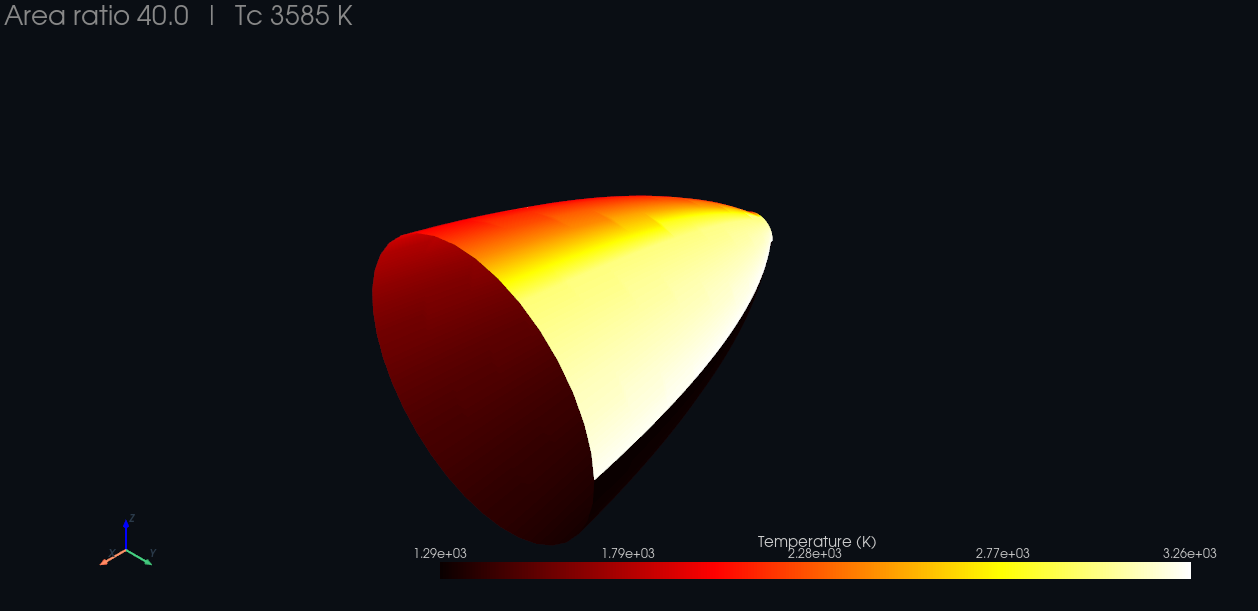
The 3-D view revolves the selected nozzle contour and colors its surface with the one-dimensional station result. It is not a CFD solution or conjugate thermal analysis.
Projects and exports
Project files store local JSON parameters and contain no executable code. CSV and Markdown exports preserve SI units in their headers. The Markdown report states the idealized model boundary. Snapshot comparison is for design-state comparison, not experimental uncertainty.
Interpreting warnings
- A convergence failure invalidates downstream nozzle performance.
- Overexpansion is a warning that the attached-flow model may be inappropriate.
- A cooling result outside a correlation domain should be rejected, not extrapolated silently.
- Acoustic frequency proximity is not proof of instability.
- Monte Carlo confidence is conditional on the selected input distributions.
Units
The current interface and computational core use SI. Do not interpret labels as converted Imperial values; the former cosmetic unit toggle was removed.